
The broad market opened in a state of suspended animation this morning, which is the institutional financial term for traders collectively waiting for someone else to make the first move. The S&P 500 ETF (SPY) hovered nearly flat at $778.01 (-0.01%), while the Nasdaq 100 (QQQ) pulled back modestly to $743.57 (-0.33%). Small caps felt somewhat heavier, with the Russell 2000 ETF (IWM) sliding -0.43% to $276.70.
Meanwhile, fixed income saw a mild bid as the 20+ Year Treasury ETF (TLT) gained +0.41% to $78.37, reflecting a slight bid for duration as high-yield credit (HYG) ticked down to $77.09 (-0.26%). Gold (GLD) eased slightly to $381.67 (-0.13%).
When equity indices drift sideways while long-dated bonds rally, it usually means market participants are debating whether current valuation multiples represent structural strength or simply excess liquidity looking for a quiet place to park.
Macro Note: Rate Mechanics and Index Inertia
The macroeconomic landscape presents a classic late-cycle paradox. Capital remains abundant, yet the marginal return on incremental risk is shrinking. High-yield spreads remain tight, signaling that corporate credit markets see minimal near-term default risk, even as long-end Treasury rates show occasional flashes of recessionary hedging.
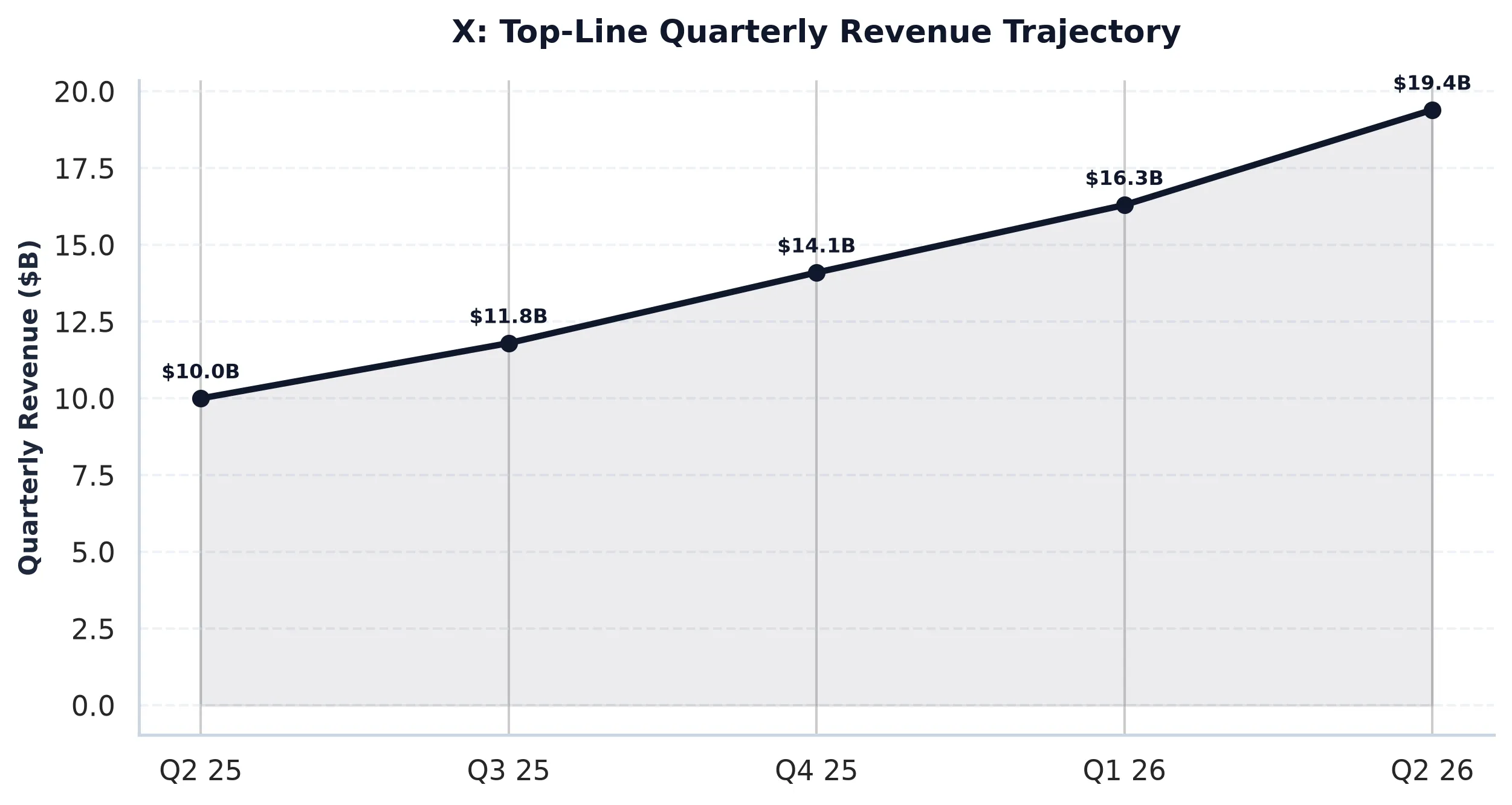
For equity investors, this environment creates a valuation ceiling. When long-term Treasury yields firm up while high-yield credit spreads remain compressed, index-level expansion becomes difficult to sustain without explosive top-line revenue growth. In the absence of massive earnings surprises, capital simply rotates within sectors, searching for specialized situations, regulatory arbitrage, or short-term volatility mispricings.
Quantitative Flow: Options Mechanics and Market Pins
From a market structure perspective, index positioning reveals a clear concentration of open interest around key strike prices. Options market makers, who spend their days attempting to remain delta-neutral, find themselves in a high-gamma regime near current spot prices.
When dealers are long gamma, they are forced to buy into market declines and sell into market rallies to keep their market-neutral books balanced. The practical result of this hedging activity is reduced realized volatility and tight trading ranges.
In single-stock names experiencing special situations, such as pending M&A deals or regulatory reviews, options flow operates under a completely different set of rules. Options market makers sell implied volatility across the board as time decay accelerates, turning target equities into synthetic binary options. The stock becomes pinned near the consensus expected value of the regulatory outcome, completely decoupled from traditional corporate cash flow models.
Sector Deep-Dive: US Steel and the Politics of Arbitrage
Consider the case of United States Steel Corporation (X). In a purely theoretical textbook world, a steel company is valued by calculating its blast furnace efficiency, its hot-rolled coil spread, its forward EV/EBITDA multiple, and its net debt position.
In the real world, when an iconic industrial manufacturer becomes the subject of a high-stakes foreign acquisition, traditional fundamental valuation models are temporarily retired. The stock price ceases to be a gauge of global steel demand and becomes, instead, a public prediction market on regulatory approvals, CFIUS national security reviews, and trade policy rhetoric.
If a proposed acquisition premium sits at a substantial spread above the prevailing market price, that discount is not telling you that blast furnaces are breaking down. It is telling you that institutional merger arbitrage desks are demanding a high equity risk premium to hold a position subject to political veto power.
When a transaction enters extended regulatory review, the fundamental financial mechanics shift dramatically:
- Cash Flow Accumulation: Operating cash flows continue to accrue on the balance sheet, but management’s ability to deploy capital into opportunistic buybacks or major strategic acquisitions is effectively frozen by transaction covenants.
- Capital Expenditure Friction: Deferred capital maintenance becomes a primary focus for fundamental analysts, as prolonged uncertainty can impair long-term plant efficiency if a deal ultimately falls through.
- Option Premium Decay: Implied volatility collapses across near-term options strikes as the stock price flatlines within a narrow trading channel dictated by arbitrage positioning.
If the deal closes, shareholders receive the agreed transaction price regardless of whether global steel prices rise or fall. If the deal is blocked or abandoned, the stock immediately re-rates back to its standalone fundamental valuation, usually accompanied by an abrupt increase in market volatility. Holding the stock becomes an exercise in sovereign risk management rather than industrial analysis.
Forensic Risk Spotlight: Structural Debt and Capital Commitments
When evaluating companies trapped in regulatory or transaction limbo, forensic balance sheet analysis must focus on structural debt covenants and legacy obligations.
For heavy industrial producers like US Steel, fixed capital requirements and environmental compliance costs do not pause while regulators deliberate. If an enterprise carries significant long-term debt and substantial legacy pension obligations, any prolonged delay in strategic capital deployment can erode the underlying standalone value.
Quantitative review of capital allocation reveals that when corporate management teams are constrained by pending merger agreements, free cash flow generation is typically diverted into liquid short-term instruments rather than high-return internal projects. If the transaction terminates, the enterprise risks returning to the open market with aged assets, diluted focus, and an altered competitive landscape.
AllWallSt Investment Verdict
| Company / Ticker: | United States Steel Corporation (X) |
| Institutional Consensus: | HOLD |
| Valuation Assessment: | Binary Event Risk / Regulatory Arbitrage Discount |
| Primary Catalyst: | CFIUS Review Resolution & Foreign Direct Investment Directives |
Conviction rating derived from quantitative fundamental models, options open interest distribution, and primary SEC filing review.
United States Steel Corporation (X)
Trailing P/E
Marcus Wolfe Screen
Leverage Profile
30D Channel
Pristine cash flow conversion (0.00x) and healthy accrual ratio (0.00%). Zero accounting anomalies detected (LOW ANOMALY RISK).
Manageable liability structure relative to institutional cash flow.
Evaluated against 5.10% US 10-Yr Benchmark; cross-asset discount rate hurdle audited.
Options volume illiquid or front-month inactive; 30-day channel (N/A) modeled via cash equity volatility.
Accumulate on pullbacks toward secondary support
Structural breakdown in operating margins or debt service failure.