
The S.P.E.C.I.A.L. Trading & Terminal Survival Guide
Starting out in stocks shouldn’t feel like reading a 400-page tax treaty. Welcome to AllWallSt’s 7-part retro survival manual: learn how Wall Street actually prices risk, avoid classic rookie traps, and turn every live Terminal app into your daily edge (or flip the top switch to Kids Club Mode for Ages 8-14!).

Certificate of Financial Mastery
has completed interactive training and earned 0 / 7 Badges inside AllWallSt Bull-Tec Academy.

Why Shiny Buyback Press Releases Fool New Investors
Your 5-Minute Morning Trading Workflow
Check Market Tide First
Before inspecting single stocks, check Treasury rate gravity, sector leadership, and the 6:30 AM pre-market rundown.
Find Stocks in Motion
Filter 5,400+ equities by multi-desk confluence, upcoming earnings straddles, or contrarian smart-money gaps.
Expose Paper Traps Early
Never buy blind: verify cash flow conversion, credit debt walls, real share buybacks net of dilution, and insider buys.
Respect Walls & Risk Tiers
Compare #1 vs. #2 peers, check option dealer Put Floors for entry zones, and cap size strictly by CRO Risk Tier.
Spread & Valuation: Don't Buy a Bank With a Toaster Calculator
Before buying any stock, check whether the underlying cash return beats risk-free Treasury bonds, whether buybacks shrink shares or merely wash away executive stock bonuses, and make sure you use bank math for banks.
Core Survival Rules
- 1. Use Real FCF (after subtracting Stock-Based Compensation) vs. the 10Y Treasury yield (~5.15%) for normal companies.
- 2. For commercial banks, ignore industrial Free Cash Flow and EBITDA; judge Net Interest Income (NII), Return on Equity (ROE), and Price-to-Book (P/B).
- 3. Verify that share buybacks exceed employee stock awards, creating true Cannibal Compounder share shrink.
AllWallSt Apps for This Chapter
Positioning & Dealer Gamma: Why Stocks Bounce Off Invisible Option Walls

Half of short-term stock movement isn't earnings news at all: it is Wall Street options dealers automatically buying dips near Put Walls and selling rips near Call Walls to keep their books neutral.
Core Survival Rules
- 1. Put Walls mark heavy downside protection clusters where dealer re-hedging often creates technical price floors.
- 2. Call Walls mark overhead upside clusters that cap sleepy rallies unless high volume triggers a breakout chase.
- 3. Max Pain acts like a gentle magnet into Friday expiration when no major news disrupts the tape.
AllWallSt Apps for This Chapter
Earnings Night Survival: Surviving the 4:05 PM Stampede Without IV Crush

Stocks can beat Wall Street's EPS estimate and still drop 6% overnight if forward guidance softens or options already priced in an even bigger swing. Know the expected straddle move before the bell rings.
Core Survival Rules
- 1. Always check the Options Implied Straddle Move (+/-%) so you know what size jump is already priced into option tickets.
- 2. Check GAAP Net Income against management's 'Adjusted EPS' add-backs to see if the beat came from operations or creative footnotes.
- 3. Spot Contrarian Divergence where falling stock prices clash with strong cash flow and insider accumulation.
AllWallSt Apps for This Chapter
Credit & Cash-Trap Forensics: Paper Profits Can't Buy Groceries
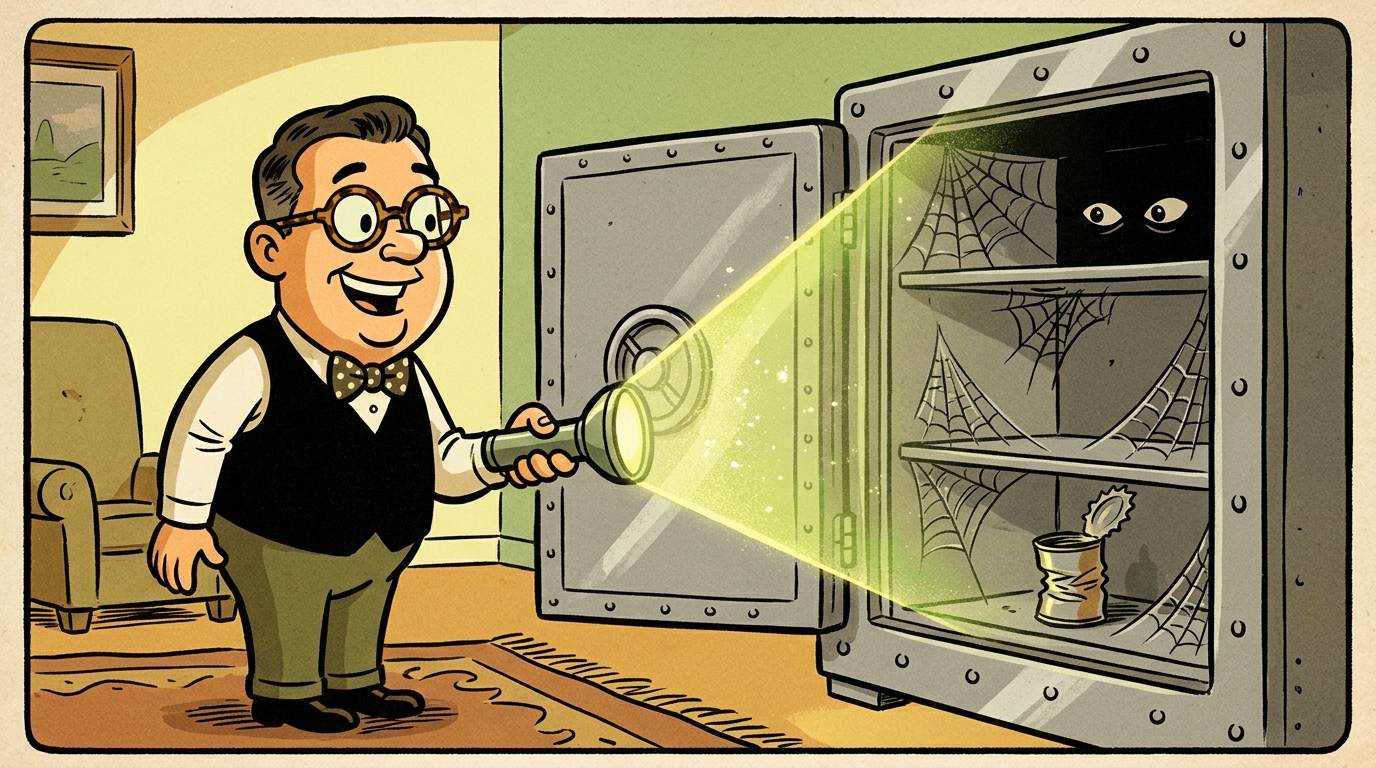
A company can legally book soaring paper profits while its actual bank account runs dry. Before buying a 'cheap' turnaround, shine an X-ray through working capital accruals and upcoming debt refinancing walls.
Core Survival Rules
- 1. Check Cash Flow Conversion (Operating Cash Flow / Net Income): below 0.70x outside banks warns that cash isn't matching accounting profits.
- 2. Watch for surging Accounts Receivable (unpaid customer IOUs) and unsold warehouse Inventory bloating faster than sales.
- 3. Inspect Net Debt / EBITDA (< 2.0x is comfy) and Interest Coverage before cheap pandemic debt rolls into a 5.15% Treasury world.
AllWallSt Apps for This Chapter
Insiders & Five-Desk Confluence: Follow Management's Wallet, Not Their Press Release

Real conviction leaves messy footprints across SEC Form 4 filings and Schedule 13D activist letters. Pair clean insider alignment with multi-factor screener quality so you filter out hype before committing capital.
Core Survival Rules
- 1. Ignore routine single automated 10b5-1 insider stock sales; pay sharp attention to unscheduled open-market Cluster Buys by CEOs and CFOs.
- 2. Track Schedule 13D activist stakes (>5% buyers demanding spin-offs or board seats) vs. passive 13G index housekeeping.
- 3. Screen the full 5,400+ US equity universe for stocks passing free cash flow, low debt, ROIC, and insider confluence simultaneously.
AllWallSt Apps for This Chapter
Allocation & Risk Guardrails: Sizing Your Chips Before the Casino Opens

Being right on direction still ruins portfolios if position sizing is reckless. Divide your capital strictly by Beta, Risk Tier, Benchmark Gravity, and written price levels where you admit a thesis failed.
Core Survival Rules
- 1. Match position weight to Risk Tier: 4-5% max for steady Tier 1 compounders, 2.5-3.5% for Tier 2 Core, < 1% for wild Tier 4 Speculative bets.
- 2. Write down your Thesis Invalidation level BEFORE buying so a 10% slip never quietly swells into a 70% bag-hold.
- 3. Distinguish between Independent Conviction and Wall Street Benchmark Gravity (big S&P weights managers are scared to miss).
AllWallSt Apps for This Chapter
Leadership, Sector Rotation & Duels: Surfing the Institutional Tidal Wave

Great stock pickers check the ocean tide first. Track where giant pension and hedge-fund flows are rotating across the 11 S&P sectors, compare two rivals side by side cleanly, and test your forecasting edge without risking real cash.
Core Survival Rules
- 1. Watch 4-week Sector Relative Rotation (RRG): look for sectors swinging out of 'Improving' into 'Leading' instead of chasing tired 'Weakening' laggards.
- 2. Always stack a target company head-to-head against its sharpest industry rival (e.g., BAC vs. JPM) so valuation discounts have context.
- 3. Practice macro & earnings probability calls in paper forecasting markets to sharpen discipline before sizing real trades.
AllWallSt Apps for This Chapter

Save Your Watchlist, Trade Journal & Future Research Updates
Sign up free with your email or log in to sync your starred “My Book” tickers, Trade Journal, and Terminal preferences across every device.